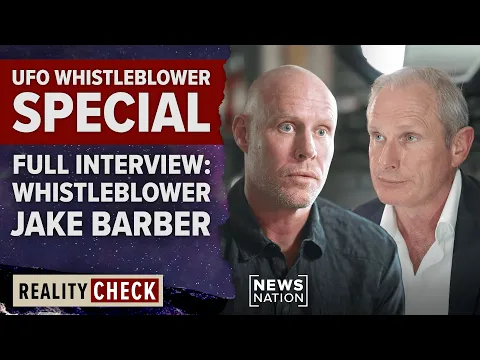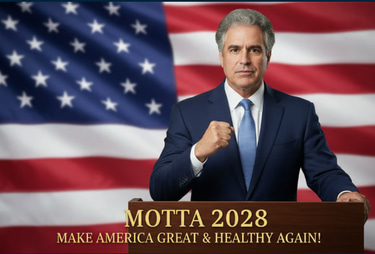
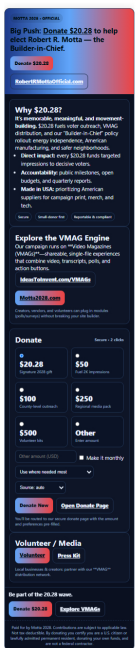



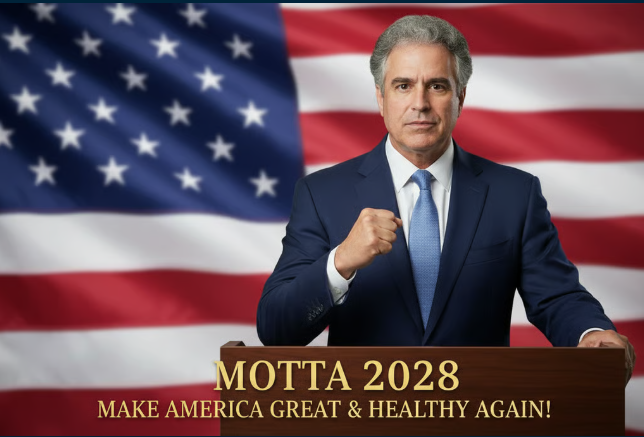
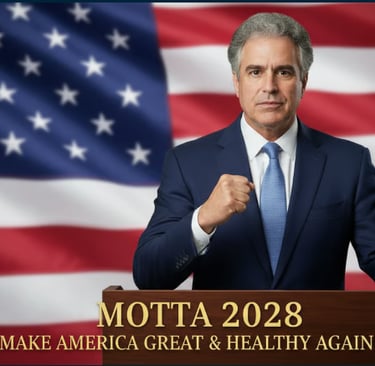
Got it. I pulled out the usable, on-message nuggets from your transcript, then turned them into: (1) tight talking points for stage/TV, (2) policy planks you can publish on Motta2028, (3) day-one + first-100-days actions, and (4) VMAG building blocks (polls, chapter labels, CTA copy) you can drop into your existing templates.
# Key takeaways from the transcript (plain English)
1. Field-Reversed Configurations (FRCs). “Compact toroids” (donut-like magnetic topologies) can confine plasma without heavy mechanical structures.
2. Two regions, one orb. Inside: a closed magnetic region (within the separatrix) that traps plasma. Outside: an open field-line sheath that interfaces with surrounding air.
3. Shape comes from B-field ratios. The inner vs. outer magnetic-field strengths (plus parameters like S and β) determine whether the plasma appears torus-like or spherical.
4. Stable, self-organized plasmas. The configuration can look calm from the outside while internal currents/flows stay active and stable (good for energy retention).
5. Formation basics. Pre-ionize gas → rapidly reverse current in theta-pinch coils → field lines reconnect → plasma implodes radially and contracts to equilibrium.
6. History + labs mentioned. Experiments referenced in Russia/Japan; U.S. programs/labs/universities (e.g., University of Washington, Princeton MRX, Los Alamos) show long-running interest in FRC/reconnection physics.
7. Helion/UW lineage (video’s claim). The video connects UW’s FRC work to Helion (a private fusion firm), arguing that academic head-starts can seed commercial leaders.
8. EVOs/ball lightning analogy (video’s claim). Frames glowing “orbs” as potentially engineered plasma related to FRC behavior; describes exhaust along open field lines.
9. Z-pinch connections. Notes theoretical heritage from Z-pinch and magnetic reconnection science.
10. Stability is the prize. Emphasis that stable, compact plasma objects could imply propulsion/energy applications if controllable.
11. Design is destiny. Hardware layout + magnetic ratios govern confinement, shape, and performance.
12. Implication for the U.S. If true/validated, this is a dual-use frontier (energy + aerospace). America should lead—and do it transparently and safely.
# Campaign soundbites (MAGA × MAHA tone)
“*Build the future here:** American labs invented the playbook—American workers will build the reactors.”
“*From orbs to kilowatts:** If plasma can hold together in the sky, it can power your home on the ground.”
“*Math > magic:** The shape isn’t mystery—it’s magnetic ratios. Let’s fund the science and own the factories.”
“*Peace through power:** Clean, reliable American energy ends dependence and lowers your bill.”
“*Open science, strong security:** Publish what we can; protect what we must.”
# Platform planks you can post on Motta2028.com
## 1) Fusion & Advanced Plasma Moonshot
* Goal: Cut time-to-prototype for grid-scale fusion and high-beta concepts (FRC/Z-pinch derivatives) by 50%.
* How: Competitive ARPA-style sprints; “**Build Credits**” for U.S. suppliers; streamlined site permits; milestone bounties for demonstrated stable confinement and net-energy thresholds.
* Why: Lower bills, re-industrialize the Midwest, and secure energy independence.
## 2) National Plasma Science Network
Link *UW, Princeton, Los Alamos** and other hubs into an open-data backbone (safeguarding sensitive pieces).
Fund *diagnostics & materials** (coils, magnets, refractory alloys, pulsed-power electronics).
Create a *Plasma Testbed Pass**—shared access for startups, not just big primes.
## 3) Dual-Use Guardrails (Energy ↔ Aerospace)
* Transparency first: Publish de-classified results; register public-facing experiments.
* Safety: Community exposure standards; incident reporting; independent QA on reconnection and theta-pinch rigs.
* Security: Clear red/black lines for export controls; protect real IP while encouraging domestic competition.
## 4) MAHA: Make America Healthy Again—STEM Edition
* Scholarships & paid apprenticeships in high-power electronics, magnet tech, welding for vacuum vessels, and controls.
* GI Bill upgrade: Fast-track veterans into fusion/advanced-energy roles; credit their MOS experience.
* Regional academies (Joliet/Midwest pilot) with union pathways for electricians, welders, machinists.
## 5) Made-in-America Supply Chain
Tax credits + procurement preference for *U.S. coils, magnets, vacuum chambers, RF systems**.
“*Buy American Energy**” clause for federal facilities that source power from U.S.-built advanced reactors/storage.
# Day-one to first-100-days actions (what you can promise)
Day-One EOs
1. Fusion Fast Lane: 180-day interagency deadline to harmonize siting/permitting for experimental plasma devices; single online application.
2. Open Plasmas Charter: Declassify and publish legacy, non-sensitive plasma research summaries; standardize public data releases.
3. Plasma Workforce Corps: Cross-agency program (Labor/DOE/DoD/Commerce) with apprenticeship grants tied to American suppliers.
First 100 Days (asks to Congress)
* ARPA-Fusion Act: $XB over 5 years, milestone-paid; prize payments for validated confinement and grid-tied demo.
* Manufacturing Credit: 20% ITC for U.S.-made coils/magnets/vacuum systems used in domestic fusion pilots.
* National Testbeds: Authorize two open-access plasma facilities (Midwest + West Coast) with public dashboards.
# VMAG building blocks (drop-in content)
## Chapter labels (based on your timestamps)
* 0:00 – What is an FRC? Compact toroids, no heavy structure
* 1:14 – Two-region model: separatrix (inside) + open sheath (outside)
* 3:12 – Exhaust along open lines (orb analogy)
* 3:30 – Z-pinch lineage
* 3:32–5:26 – Why spheres vs donuts: magnetic ratio/β explains shape
* 5:48–8:32 – How FRCs form: pre-ionize → theta-pinch → reconnection → equilibrium
* 8:35–12:28 – Who’s working on it: Russia/Japan/U.S.; UW, MRX, Los Alamos, etc.
* 11:59–12:28 – Dual-use implications (energy, propulsion curiosity)
## Polls (copy to your VMAG poll module)
1. What’s the most promising near-term payoff?
* Lower electric bills via fusion heat
* Grid stability & storage
* Aerospace/propulsion research
* Not convinced yet
2. Where should the U.S. lead first?
* Open testbeds & diagnostics
* Manufacturing (coils/magnets)
* Workforce & apprenticeships
* Classified defense research
3. What would make you support federal funding?
* Clear consumer price cuts
* U.S.-only jobs & factories
* Open data & independent audits
* Private-match requirement
## Survey prompts (for your VMAG “Quick Survey”)
* “What part of the video changed your mind?”
“Would you support a *Fusion & Advanced Plasma Moonshot** if it lowered your bill?”
* “What guardrails should we set (safety, transparency, export controls)?”
## CTA strip (copy)
* “Join the Plasma Workforce.” Apprenticeships for electricians/welders/techs—apply today.
* “Founders & Fabricators.” Suppliers: list your coils, magnets, vacuum parts—get pre-qualified.
* “Open Data, Real Results.” Follow our testbeds in real time: milestones, runs, audits.
# “Once elected” idea set for the USA
* American Fusion Commons: two national, open-access plasma labs with YouTube-style live dashboards (sensor streams delayed for safety); FOA tracks for small teams.
* Midwest Magnet Works: a Joliet-anchored consortium to build high-field magnets/coils, with high-school-to-apprentice pipelines.
* Prize Ladder: $10M → $100M prizes for milestones: stable FRC at X ms, β≈1 target, validated energy gain, grid-tied thermal pilot.
* Fusion-Ready Codes: National code updates so municipalities can approve low-risk experimental rigs with standardized safety checklists.
* Dual-Use Board: Civilian, defense, academic members—**publish** what can be public; lock down what must be protected; annual report.
---
Want me to drop these into your working VMAG (poll objects + chapter JSON + CTA) or generate a ready-to-paste embed that preloads the video, adds these polls/surveys, and prints as an eMAG one-pager?
Got it. I pulled out the usable, on-message nuggets from your transcript, then turned them into: (1) tight talking points for stage/TV, (2) policy planks you can publish on Motta2028, (3) day-one + first-100-days actions, and (4) VMAG building blocks (polls, chapter labels, CTA copy) you can drop into your existing templates.
# Key takeaways from the transcript (plain English)
1. Field-Reversed Configurations (FRCs). “Compact toroids” (donut-like magnetic topologies) can confine plasma without heavy mechanical structures.
2. Two regions, one orb. Inside: a closed magnetic region (within the separatrix) that traps plasma. Outside: an open field-line sheath that interfaces with surrounding air.
3. Shape comes from B-field ratios. The inner vs. outer magnetic-field strengths (plus parameters like S and β) determine whether the plasma appears torus-like or spherical.
4. Stable, self-organized plasmas. The configuration can look calm from the outside while internal currents/flows stay active and stable (good for energy retention).
5. Formation basics. Pre-ionize gas → rapidly reverse current in theta-pinch coils → field lines reconnect → plasma implodes radially and contracts to equilibrium.
6. History + labs mentioned. Experiments referenced in Russia/Japan; U.S. programs/labs/universities (e.g., University of Washington, Princeton MRX, Los Alamos) show long-running interest in FRC/reconnection physics.
7. Helion/UW lineage (video’s claim). The video connects UW’s FRC work to Helion (a private fusion firm), arguing that academic head-starts can seed commercial leaders.
8. EVOs/ball lightning analogy (video’s claim). Frames glowing “orbs” as potentially engineered plasma related to FRC behavior; describes exhaust along open field lines.
9. Z-pinch connections. Notes theoretical heritage from Z-pinch and magnetic reconnection science.
10. Stability is the prize. Emphasis that stable, compact plasma objects could imply propulsion/energy applications if controllable.
11. Design is destiny. Hardware layout + magnetic ratios govern confinement, shape, and performance.
12. Implication for the U.S. If true/validated, this is a dual-use frontier (energy + aerospace). America should lead—and do it transparently and safely.
# Campaign soundbites (MAGA × MAHA tone)
“*Build the future here:** American labs invented the playbook—American workers will build the reactors.”
“*From orbs to kilowatts:** If plasma can hold together in the sky, it can power your home on the ground.”
“*Math > magic:** The shape isn’t mystery—it’s magnetic ratios. Let’s fund the science and own the factories.”
“*Peace through power:** Clean, reliable American energy ends dependence and lowers your bill.”
“*Open science, strong security:** Publish what we can; protect what we must.”
# Platform planks you can post on Motta2028.com
## 1) Fusion & Advanced Plasma Moonshot
* Goal: Cut time-to-prototype for grid-scale fusion and high-beta concepts (FRC/Z-pinch derivatives) by 50%.
* How: Competitive ARPA-style sprints; “**Build Credits**” for U.S. suppliers; streamlined site permits; milestone bounties for demonstrated stable confinement and net-energy thresholds.
* Why: Lower bills, re-industrialize the Midwest, and secure energy independence.
## 2) National Plasma Science Network
Link *UW, Princeton, Los Alamos** and other hubs into an open-data backbone (safeguarding sensitive pieces).
Fund *diagnostics & materials** (coils, magnets, refractory alloys, pulsed-power electronics).
Create a *Plasma Testbed Pass**—shared access for startups, not just big primes.
## 3) Dual-Use Guardrails (Energy ↔ Aerospace)
* Transparency first: Publish de-classified results; register public-facing experiments.
* Safety: Community exposure standards; incident reporting; independent QA on reconnection and theta-pinch rigs.
* Security: Clear red/black lines for export controls; protect real IP while encouraging domestic competition.
## 4) MAHA: Make America Healthy Again—STEM Edition
* Scholarships & paid apprenticeships in high-power electronics, magnet tech, welding for vacuum vessels, and controls.
* GI Bill upgrade: Fast-track veterans into fusion/advanced-energy roles; credit their MOS experience.
* Regional academies (Joliet/Midwest pilot) with union pathways for electricians, welders, machinists.
## 5) Made-in-America Supply Chain
Tax credits + procurement preference for *U.S. coils, magnets, vacuum chambers, RF systems**.
“*Buy American Energy**” clause for federal facilities that source power from U.S.-built advanced reactors/storage.
# Day-one to first-100-days actions (what you can promise)
Day-One EOs
1. Fusion Fast Lane: 180-day interagency deadline to harmonize siting/permitting for experimental plasma devices; single online application.
2. Open Plasmas Charter: Declassify and publish legacy, non-sensitive plasma research summaries; standardize public data releases.
3. Plasma Workforce Corps: Cross-agency program (Labor/DOE/DoD/Commerce) with apprenticeship grants tied to American suppliers.
First 100 Days (asks to Congress)
* ARPA-Fusion Act: $XB over 5 years, milestone-paid; prize payments for validated confinement and grid-tied demo.
* Manufacturing Credit: 20% ITC for U.S.-made coils/magnets/vacuum systems used in domestic fusion pilots.
* National Testbeds: Authorize two open-access plasma facilities (Midwest + West Coast) with public dashboards.
# VMAG building blocks (drop-in content)
## Chapter labels (based on your timestamps)
* 0:00 – What is an FRC? Compact toroids, no heavy structure
* 1:14 – Two-region model: separatrix (inside) + open sheath (outside)
* 3:12 – Exhaust along open lines (orb analogy)
* 3:30 – Z-pinch lineage
* 3:32–5:26 – Why spheres vs donuts: magnetic ratio/β explains shape
* 5:48–8:32 – How FRCs form: pre-ionize → theta-pinch → reconnection → equilibrium
* 8:35–12:28 – Who’s working on it: Russia/Japan/U.S.; UW, MRX, Los Alamos, etc.
* 11:59–12:28 – Dual-use implications (energy, propulsion curiosity)
## Polls (copy to your VMAG poll module)
1. What’s the most promising near-term payoff?
* Lower electric bills via fusion heat
* Grid stability & storage
* Aerospace/propulsion research
* Not convinced yet
2. Where should the U.S. lead first?
* Open testbeds & diagnostics
* Manufacturing (coils/magnets)
* Workforce & apprenticeships
* Classified defense research
3. What would make you support federal funding?
* Clear consumer price cuts
* U.S.-only jobs & factories
* Open data & independent audits
* Private-match requirement
## Survey prompts (for your VMAG “Quick Survey”)
* “What part of the video changed your mind?”
“Would you support a *Fusion & Advanced Plasma Moonshot** if it lowered your bill?”
* “What guardrails should we set (safety, transparency, export controls)?”
## CTA strip (copy)
* “Join the Plasma Workforce.” Apprenticeships for electricians/welders/techs—apply today.
* “Founders & Fabricators.” Suppliers: list your coils, magnets, vacuum parts—get pre-qualified.
* “Open Data, Real Results.” Follow our testbeds in real time: milestones, runs, audits.
# “Once elected” idea set for the USA
* American Fusion Commons: two national, open-access plasma labs with YouTube-style live dashboards (sensor streams delayed for safety); FOA tracks for small teams.
* Midwest Magnet Works: a Joliet-anchored consortium to build high-field magnets/coils, with high-school-to-apprentice pipelines.
* Prize Ladder: $10M → $100M prizes for milestones: stable FRC at X ms, β≈1 target, validated energy gain, grid-tied thermal pilot.
* Fusion-Ready Codes: National code updates so municipalities can approve low-risk experimental rigs with standardized safety checklists.
* Dual-Use Board: Civilian, defense, academic members—**publish** what can be public; lock down what must be protected; annual report.
---
Want me to drop these into your working VMAG (poll objects + chapter JSON + CTA) or generate a ready-to-paste embed that preloads the video, adds these polls/surveys, and prints as an eMAG one-pager?
Got it. I pulled out the usable, on-message nuggets from your transcript, then turned them into: (1) tight talking points for stage/TV, (2) policy planks you can publish on Motta2028, (3) day-one + first-100-days actions, and (4) VMAG building blocks (polls, chapter labels, CTA copy) you can drop into your existing templates.
# Key takeaways from the transcript (plain English)
1. Field-Reversed Configurations (FRCs). “Compact toroids” (donut-like magnetic topologies) can confine plasma without heavy mechanical structures.
2. Two regions, one orb. Inside: a closed magnetic region (within the separatrix) that traps plasma. Outside: an open field-line sheath that interfaces with surrounding air.
3. Shape comes from B-field ratios. The inner vs. outer magnetic-field strengths (plus parameters like S and β) determine whether the plasma appears torus-like or spherical.
4. Stable, self-organized plasmas. The configuration can look calm from the outside while internal currents/flows stay active and stable (good for energy retention).
5. Formation basics. Pre-ionize gas → rapidly reverse current in theta-pinch coils → field lines reconnect → plasma implodes radially and contracts to equilibrium.
6. History + labs mentioned. Experiments referenced in Russia/Japan; U.S. programs/labs/universities (e.g., University of Washington, Princeton MRX, Los Alamos) show long-running interest in FRC/reconnection physics.
7. Helion/UW lineage (video’s claim). The video connects UW’s FRC work to Helion (a private fusion firm), arguing that academic head-starts can seed commercial leaders.
8. EVOs/ball lightning analogy (video’s claim). Frames glowing “orbs” as potentially engineered plasma related to FRC behavior; describes exhaust along open field lines.
9. Z-pinch connections. Notes theoretical heritage from Z-pinch and magnetic reconnection science.
10. Stability is the prize. Emphasis that stable, compact plasma objects could imply propulsion/energy applications if controllable.
11. Design is destiny. Hardware layout + magnetic ratios govern confinement, shape, and performance.
12. Implication for the U.S. If true/validated, this is a dual-use frontier (energy + aerospace). America should lead—and do it transparently and safely.
# Campaign soundbites (MAGA × MAHA tone)
“*Build the future here:** American labs invented the playbook—American workers will build the reactors.”
“*From orbs to kilowatts:** If plasma can hold together in the sky, it can power your home on the ground.”
“*Math > magic:** The shape isn’t mystery—it’s magnetic ratios. Let’s fund the science and own the factories.”
“*Peace through power:** Clean, reliable American energy ends dependence and lowers your bill.”
“*Open science, strong security:** Publish what we can; protect what we must.”
# Platform planks you can post on Motta2028.com
## 1) Fusion & Advanced Plasma Moonshot
* Goal: Cut time-to-prototype for grid-scale fusion and high-beta concepts (FRC/Z-pinch derivatives) by 50%.
* How: Competitive ARPA-style sprints; “**Build Credits**” for U.S. suppliers; streamlined site permits; milestone bounties for demonstrated stable confinement and net-energy thresholds.
* Why: Lower bills, re-industrialize the Midwest, and secure energy independence.
## 2) National Plasma Science Network
Link *UW, Princeton, Los Alamos** and other hubs into an open-data backbone (safeguarding sensitive pieces).
Fund *diagnostics & materials** (coils, magnets, refractory alloys, pulsed-power electronics).
Create a *Plasma Testbed Pass**—shared access for startups, not just big primes.
## 3) Dual-Use Guardrails (Energy ↔ Aerospace)
* Transparency first: Publish de-classified results; register public-facing experiments.
* Safety: Community exposure standards; incident reporting; independent QA on reconnection and theta-pinch rigs.
* Security: Clear red/black lines for export controls; protect real IP while encouraging domestic competition.
## 4) MAHA: Make America Healthy Again—STEM Edition
* Scholarships & paid apprenticeships in high-power electronics, magnet tech, welding for vacuum vessels, and controls.
* GI Bill upgrade: Fast-track veterans into fusion/advanced-energy roles; credit their MOS experience.
* Regional academies (Joliet/Midwest pilot) with union pathways for electricians, welders, machinists.
## 5) Made-in-America Supply Chain
Tax credits + procurement preference for *U.S. coils, magnets, vacuum chambers, RF systems**.
“*Buy American Energy**” clause for federal facilities that source power from U.S.-built advanced reactors/storage.
# Day-one to first-100-days actions (what you can promise)
Day-One EOs
1. Fusion Fast Lane: 180-day interagency deadline to harmonize siting/permitting for experimental plasma devices; single online application.
2. Open Plasmas Charter: Declassify and publish legacy, non-sensitive plasma research summaries; standardize public data releases.
3. Plasma Workforce Corps: Cross-agency program (Labor/DOE/DoD/Commerce) with apprenticeship grants tied to American suppliers.
First 100 Days (asks to Congress)
* ARPA-Fusion Act: $XB over 5 years, milestone-paid; prize payments for validated confinement and grid-tied demo.
* Manufacturing Credit: 20% ITC for U.S.-made coils/magnets/vacuum systems used in domestic fusion pilots.
* National Testbeds: Authorize two open-access plasma facilities (Midwest + West Coast) with public dashboards.
# VMAG building blocks (drop-in content)
## Chapter labels (based on your timestamps)
* 0:00 – What is an FRC? Compact toroids, no heavy structure
* 1:14 – Two-region model: separatrix (inside) + open sheath (outside)
* 3:12 – Exhaust along open lines (orb analogy)
* 3:30 – Z-pinch lineage
* 3:32–5:26 – Why spheres vs donuts: magnetic ratio/β explains shape
* 5:48–8:32 – How FRCs form: pre-ionize → theta-pinch → reconnection → equilibrium
* 8:35–12:28 – Who’s working on it: Russia/Japan/U.S.; UW, MRX, Los Alamos, etc.
* 11:59–12:28 – Dual-use implications (energy, propulsion curiosity)
## Polls (copy to your VMAG poll module)
1. What’s the most promising near-term payoff?
* Lower electric bills via fusion heat
* Grid stability & storage
* Aerospace/propulsion research
* Not convinced yet
2. Where should the U.S. lead first?
* Open testbeds & diagnostics
* Manufacturing (coils/magnets)
* Workforce & apprenticeships
* Classified defense research
3. What would make you support federal funding?
* Clear consumer price cuts
* U.S.-only jobs & factories
* Open data & independent audits
* Private-match requirement
## Survey prompts (for your VMAG “Quick Survey”)
* “What part of the video changed your mind?”
“Would you support a *Fusion & Advanced Plasma Moonshot** if it lowered your bill?”
* “What guardrails should we set (safety, transparency, export controls)?”
## CTA strip (copy)
* “Join the Plasma Workforce.” Apprenticeships for electricians/welders/techs—apply today.
* “Founders & Fabricators.” Suppliers: list your coils, magnets, vacuum parts—get pre-qualified.
* “Open Data, Real Results.” Follow our testbeds in real time: milestones, runs, audits.
# “Once elected” idea set for the USA
* American Fusion Commons: two national, open-access plasma labs with YouTube-style live dashboards (sensor streams delayed for safety); FOA tracks for small teams.
* Midwest Magnet Works: a Joliet-anchored consortium to build high-field magnets/coils, with high-school-to-apprentice pipelines.
* Prize Ladder: $10M → $100M prizes for milestones: stable FRC at X ms, β≈1 target, validated energy gain, grid-tied thermal pilot.
* Fusion-Ready Codes: National code updates so municipalities can approve low-risk experimental rigs with standardized safety checklists.
* Dual-Use Board: Civilian, defense, academic members—**publish** what can be public; lock down what must be protected; annual report.
---
Want me to drop these into your working VMAG (poll objects + chapter JSON + CTA) or generate a ready-to-paste embed that preloads the video, adds these polls/surveys, and prints as an eMAG one-pager?


Here’s a clean, voter-friendly explainer of what the President of the United States is constitutionally responsible for—and how I’d carry those duties if elected the 48th President.
# Core constitutional duties (what the job is)
* Chief Executive. Enforce the laws passed by Congress, run the executive branch, and supervise federal departments and agencies through appointed leaders (the Cabinet and other officers). ([The White House][1])
* Commander in Chief. Lead the U.S. armed forces. (Congress controls declarations of war and funding; the President directs military operations.) ([National Archives][2])
* Chief Diplomat. Negotiate treaties and conduct foreign relations; treaties take effect only with a two-thirds vote of the Senate. ([National Archives][2])
* Legislative partner. Recommend measures to Congress, sign bills into law or veto them (Congress can override by two-thirds), and deliver the annual State of the Union. ([National Archives][2])
* Appointments & removals. Nominate Cabinet secretaries, ambassadors, agency heads, and federal judges (including the Supreme Court), with Senate confirmation; fill certain vacancies temporarily. ([National Archives][2])
* Clemency. Grant pardons and commutations for federal offenses (except in cases of impeachment). ([National Archives][2])
# Guardrails & limits (how power is checked)
* Separation of powers. Congress writes the laws and controls the purse; courts interpret the laws; the President executes them—no branch can do it all. ([Congress.gov][3])
* Senate advice & consent. Many appointments and all treaties require Senate approval. ([National Archives][2])
* Oversight & impeachment. Congress investigates and can impeach and remove a President for “Treason, Bribery, or other high Crimes and Misdemeanors.” ([U.S. Senate][4])
* Term limits & succession. Modern practice limits a President to two elected terms; the Vice President is ready to assume the office if needed. ([The White House][1])
# Day-to-day leadership (what voters can expect)
* Manage the federal government so services work—safely, on budget, and on time—through clear goals, accountable appointees, and performance metrics. ([Every CRS Report][5])
* Protect the nation by directing military readiness and crisis response, while keeping Congress informed and the public briefed. ([Congress.gov][6])
* Represent America abroad, build alliances, and negotiate deals that advance U.S. security and prosperity. ([National Archives][2])
* Work with Congress on legislation and budgets; use the veto sparingly but responsibly when a bill isn’t in the national interest. ([National Archives][2])
* Uphold the Constitution—including civil rights and the rule of law—every single day. ([National Archives][2])
# My pledge to voters (how I’d apply the job)
1. Competent management: nominate qualified, Senate-confirmable leaders; publish agency scorecards you can track. ([The White House][1])
2. Transparent governance: regular briefings; clear explanations of vetoes, executive orders, and major decisions. ([National Archives][2])
3. Accountable security: decisive as Commander in Chief, with Congress fully briefed on deployments and objectives. ([Congress.gov][6])
4. Respect for checks & balances: collaborate where possible, stand firm where necessary, always within constitutional boundaries. ([Congress.gov][3])
If you want, I can turn this into a one-page handout for Motta2028.com, with plain-English summaries plus links to the Constitution and the White House explainer. ([National Archives][2])
[1]: https://www.whitehouse.gov/government/executive-branch/?utm_source=chatgpt.com "The Executive Branch"
[2]: https://www.archives.gov/founding-docs/constitution-transcript?utm_source=chatgpt.com "The Constitution of the United States: A Transcription"
[3]: https://www.congress.gov/crs_external_products/R/PDF/R44729/R44729.8.pdf?utm_source=chatgpt.com "Constitutional Authority Statements and the Powers of ..."
[4]: https://www.senate.gov/civics/constitution_item/constitution.htm?utm_source=chatgpt.com "Constitution of the United States"
[5]: https://www.everycrsreport.com/files/2025-05-02_R48523_0e8f02f15e770063402b6b4e0895ccc5eb68ca2e.pdf?utm_source=chatgpt.com "Organizing Executive Branch Agencies: Structure and ..."
[6]: https://constitution.congress.gov/browse/article-2/section-2/?utm_source=chatgpt.com "Article II Section 2 | Constitution Annotated | Library of Congress"
Here’s a clean, voter-friendly explainer of what the President of the United States is constitutionally responsible for—and how I’d carry those duties if elected the 48th President.
# Core constitutional duties (what the job is)
* Chief Executive. Enforce the laws passed by Congress, run the executive branch, and supervise federal departments and agencies through appointed leaders (the Cabinet and other officers). ([The White House][1])
* Commander in Chief. Lead the U.S. armed forces. (Congress controls declarations of war and funding; the President directs military operations.) ([National Archives][2])
* Chief Diplomat. Negotiate treaties and conduct foreign relations; treaties take effect only with a two-thirds vote of the Senate. ([National Archives][2])
* Legislative partner. Recommend measures to Congress, sign bills into law or veto them (Congress can override by two-thirds), and deliver the annual State of the Union. ([National Archives][2])
* Appointments & removals. Nominate Cabinet secretaries, ambassadors, agency heads, and federal judges (including the Supreme Court), with Senate confirmation; fill certain vacancies temporarily. ([National Archives][2])
* Clemency. Grant pardons and commutations for federal offenses (except in cases of impeachment). ([National Archives][2])
# Guardrails & limits (how power is checked)
* Separation of powers. Congress writes the laws and controls the purse; courts interpret the laws; the President executes them—no branch can do it all. ([Congress.gov][3])
* Senate advice & consent. Many appointments and all treaties require Senate approval. ([National Archives][2])
* Oversight & impeachment. Congress investigates and can impeach and remove a President for “Treason, Bribery, or other high Crimes and Misdemeanors.” ([U.S. Senate][4])
* Term limits & succession. Modern practice limits a President to two elected terms; the Vice President is ready to assume the office if needed. ([The White House][1])
# Day-to-day leadership (what voters can expect)
* Manage the federal government so services work—safely, on budget, and on time—through clear goals, accountable appointees, and performance metrics. ([Every CRS Report][5])
* Protect the nation by directing military readiness and crisis response, while keeping Congress informed and the public briefed. ([Congress.gov][6])
* Represent America abroad, build alliances, and negotiate deals that advance U.S. security and prosperity. ([National Archives][2])
* Work with Congress on legislation and budgets; use the veto sparingly but responsibly when a bill isn’t in the national interest. ([National Archives][2])
* Uphold the Constitution—including civil rights and the rule of law—every single day. ([National Archives][2])
# My pledge to voters (how I’d apply the job)
1. Competent management: nominate qualified, Senate-confirmable leaders; publish agency scorecards you can track. ([The White House][1])
2. Transparent governance: regular briefings; clear explanations of vetoes, executive orders, and major decisions. ([National Archives][2])
3. Accountable security: decisive as Commander in Chief, with Congress fully briefed on deployments and objectives. ([Congress.gov][6])
4. Respect for checks & balances: collaborate where possible, stand firm where necessary, always within constitutional boundaries. ([Congress.gov][3])
If you want, I can turn this into a one-page handout for Motta2028.com, with plain-English summaries plus links to the Constitution and the White House explainer. ([National Archives][2])
[1]: https://www.whitehouse.gov/government/executive-branch/?utm_source=chatgpt.com "The Executive Branch"
[2]: https://www.archives.gov/founding-docs/constitution-transcript?utm_source=chatgpt.com "The Constitution of the United States: A Transcription"
[3]: https://www.congress.gov/crs_external_products/R/PDF/R44729/R44729.8.pdf?utm_source=chatgpt.com "Constitutional Authority Statements and the Powers of ..."
[4]: https://www.senate.gov/civics/constitution_item/constitution.htm?utm_source=chatgpt.com "Constitution of the United States"
[5]: https://www.everycrsreport.com/files/2025-05-02_R48523_0e8f02f15e770063402b6b4e0895ccc5eb68ca2e.pdf?utm_source=chatgpt.com "Organizing Executive Branch Agencies: Structure and ..."
[6]: https://constitution.congress.gov/browse/article-2/section-2/?utm_source=chatgpt.com "Article II Section 2 | Constitution Annotated | Library of Congress"
Here’s a clean, voter-friendly explainer of what the President of the United States is constitutionally responsible for—and how I’d carry those duties if elected the 48th President.
# Core constitutional duties (what the job is)
* Chief Executive. Enforce the laws passed by Congress, run the executive branch, and supervise federal departments and agencies through appointed leaders (the Cabinet and other officers). ([The White House][1])
* Commander in Chief. Lead the U.S. armed forces. (Congress controls declarations of war and funding; the President directs military operations.) ([National Archives][2])
* Chief Diplomat. Negotiate treaties and conduct foreign relations; treaties take effect only with a two-thirds vote of the Senate. ([National Archives][2])
* Legislative partner. Recommend measures to Congress, sign bills into law or veto them (Congress can override by two-thirds), and deliver the annual State of the Union. ([National Archives][2])
* Appointments & removals. Nominate Cabinet secretaries, ambassadors, agency heads, and federal judges (including the Supreme Court), with Senate confirmation; fill certain vacancies temporarily. ([National Archives][2])
* Clemency. Grant pardons and commutations for federal offenses (except in cases of impeachment). ([National Archives][2])
# Guardrails & limits (how power is checked)
* Separation of powers. Congress writes the laws and controls the purse; courts interpret the laws; the President executes them—no branch can do it all. ([Congress.gov][3])
* Senate advice & consent. Many appointments and all treaties require Senate approval. ([National Archives][2])
* Oversight & impeachment. Congress investigates and can impeach and remove a President for “Treason, Bribery, or other high Crimes and Misdemeanors.” ([U.S. Senate][4])
* Term limits & succession. Modern practice limits a President to two elected terms; the Vice President is ready to assume the office if needed. ([The White House][1])
# Day-to-day leadership (what voters can expect)
* Manage the federal government so services work—safely, on budget, and on time—through clear goals, accountable appointees, and performance metrics. ([Every CRS Report][5])
* Protect the nation by directing military readiness and crisis response, while keeping Congress informed and the public briefed. ([Congress.gov][6])
* Represent America abroad, build alliances, and negotiate deals that advance U.S. security and prosperity. ([National Archives][2])
* Work with Congress on legislation and budgets; use the veto sparingly but responsibly when a bill isn’t in the national interest. ([National Archives][2])
* Uphold the Constitution—including civil rights and the rule of law—every single day. ([National Archives][2])
# My pledge to voters (how I’d apply the job)
1. Competent management: nominate qualified, Senate-confirmable leaders; publish agency scorecards you can track. ([The White House][1])
2. Transparent governance: regular briefings; clear explanations of vetoes, executive orders, and major decisions. ([National Archives][2])
3. Accountable security: decisive as Commander in Chief, with Congress fully briefed on deployments and objectives. ([Congress.gov][6])
4. Respect for checks & balances: collaborate where possible, stand firm where necessary, always within constitutional boundaries. ([Congress.gov][3])
If you want, I can turn this into a one-page handout for Motta2028.com, with plain-English summaries plus links to the Constitution and the White House explainer. ([National Archives][2])
[1]: https://www.whitehouse.gov/government/executive-branch/?utm_source=chatgpt.com "The Executive Branch"
[2]: https://www.archives.gov/founding-docs/constitution-transcript?utm_source=chatgpt.com "The Constitution of the United States: A Transcription"
[3]: https://www.congress.gov/crs_external_products/R/PDF/R44729/R44729.8.pdf?utm_source=chatgpt.com "Constitutional Authority Statements and the Powers of ..."
[4]: https://www.senate.gov/civics/constitution_item/constitution.htm?utm_source=chatgpt.com "Constitution of the United States"
[5]: https://www.everycrsreport.com/files/2025-05-02_R48523_0e8f02f15e770063402b6b4e0895ccc5eb68ca2e.pdf?utm_source=chatgpt.com "Organizing Executive Branch Agencies: Structure and ..."
[6]: https://constitution.congress.gov/browse/article-2/section-2/?utm_source=chatgpt.com "Article II Section 2 | Constitution Annotated | Library of Congress"